The Complete Mens Skincare Guide: From Zero to Glass Skin
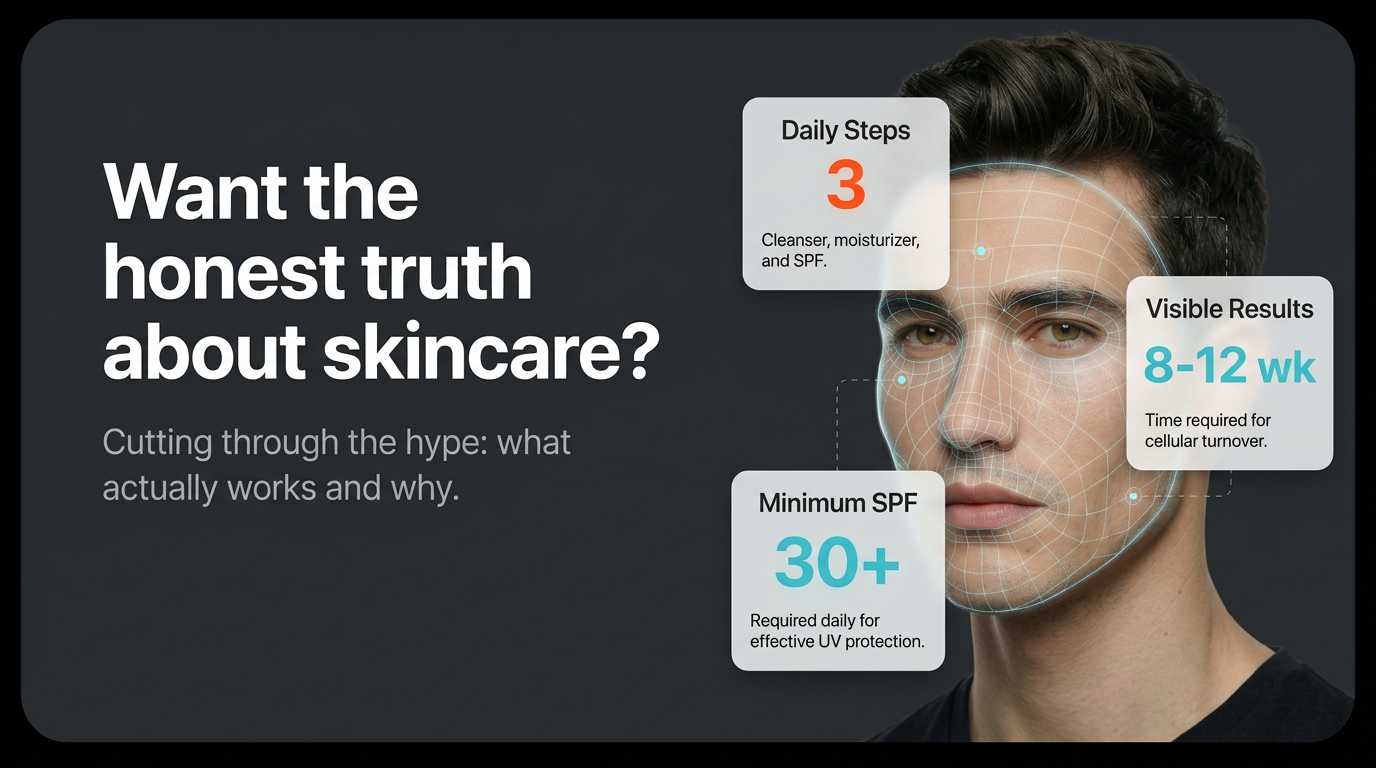
A skincare routine for men is a structured daily regimen of cleansing, moisturizing, and protecting the face that repairs the skin barrier and prevents premature aging. It uses clinically proven ingredients to manage acne, even out skin tone, and maintain structural integrity over a lifetime.
This guide breaks down exactly how to build a skincare routine for men, cutting through marketing fluff to focus on clinical evidence. It is written for guys who want clear, resilient skin without spending hours in the bathroom or wasting money on useless products.
The Foundation of a Skincare Routine for Men
Understanding your skin is the first step before buying a single product. Male skin differs from female skin in a few structural ways. It is naturally thicker, contains more collagen density, and produces more sebum due to higher androgen levels. This makes men naturally more prone to oily skin and acne, but slightly more resistant to early fine lines.
Despite these differences, the biological mechanisms of skin barrier function remain identical. The goal of any effective regimen is to support the stratum corneum, which is the outermost layer of your skin. When this barrier is compromised by harsh soaps or environmental damage, it loses moisture and lets bacteria in, leading to inflammation and breakouts.
To figure out what your specific barrier needs, taking a structured personalized assessment is highly recommended. It helps establish a baseline for your skin type, whether it is oily, dry, combination, or sensitive. You cannot fix a problem if you do not accurately diagnose the starting point.
Many men skip this diagnostic phase and buy whatever product has the most aggressive marketing. This usually results in purchasing harsh astringents that strip the skin of its natural lipids. A healthy lipid matrix is what keeps your face looking smooth and resilient. Destroying it is the fastest way to guarantee chronic redness and rebound oil production.
Cleansing and Exfoliating: The First Step in Male Facial Care
The core purpose of cleansing is to remove excess sebum, dead skin cells, and daily pollution without stripping the skin of its natural lipids. The community folklore often suggests scrubbing the face with harsh bar soaps to achieve a squeaky clean feeling. This is actively harmful. That tight feeling indicates a damaged acid mantle.
Choosing a daily cleanser: You need a gentle, pH-balanced cleanser. Foaming cleansers are generally better for oily skin, while hydrating cream cleansers are optimal for dry skin. You should wash your face twice a day: once in the morning and once at night. Water temperature matters. Always use lukewarm water, as hot water strips lipids and increases redness.
The role of exfoliation: Exfoliation removes dead skin cells that clog pores. Physical scrubs with walnut shells or heavy grit cause micro-tears in the skin and should be avoided. Instead, chemical exfoliants are the gold standard. Salicylic acid is a beta-hydroxy acid that penetrates oil to clean out pores, making it ideal for acne. Glycolic acid is an alpha-hydroxy acid that works on the surface to improve texture.
Exfoliation should be limited to two or three times a week. Daily use is a fast track to barrier damage. If you have active breakouts, prioritize chemical exfoliants over physical manipulation to avoid spreading bacteria. Chemical exfoliants work by dissolving the bonds between dead skin cells, allowing them to shed naturally without friction.
LooxMaxxing
Want to know where you actually stand?
Upload three photos, answer the assessment and get an AI facial rating with a personalized improvement program.
Take the free assessmentHydration and Barrier Repair: Moisturizing for Men
Every skin type needs a moisturizer, including oily skin. When oily skin is dehydrated, it overcompensates by producing even more sebum, creating a vicious cycle of greasiness and breakouts. Moisturizers work through a combination of humectants that draw water into the skin, emollients that smooth the surface, and occlusives that lock the moisture in.
Selecting the right texture: Men with oily skin should look for lightweight gel moisturizers. Men with dry skin require heavier creams containing ceramides. Ceramides are lipids that naturally occur in the skin and act as the mortar between your skin cells. Replenishing them is critical for a healthy barrier.
Incorporating niacinamide: For barrier support, niacinamide is a powerhouse ingredient. There is robust clinical evidence for the applications of nicotinamide to control skin aging, reduce hyperpigmentation, and regulate sebum production. Look for a moisturizer that includes niacinamide for optimal daily maintenance without irritation.
Apply your moisturizer while your skin is still slightly damp from cleansing. This traps the maximum amount of water in the upper layers of the epidermis. Skipping this step leaves the skin vulnerable to transepidermal water loss, which makes fine lines look deeper and skin texture appear rough.
Sun Protection and Anti-Aging: The Ultimate Skin Maximizer
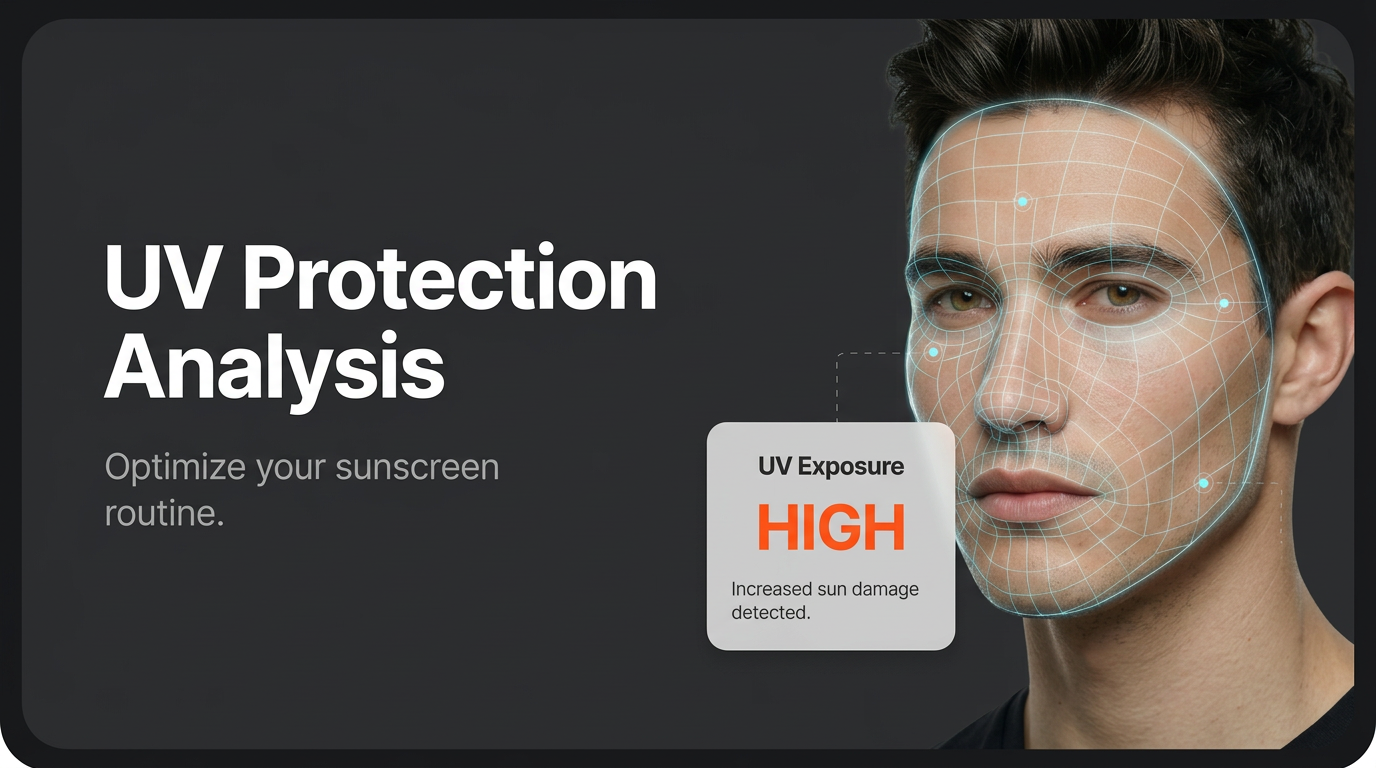
If you only use one skincare product for the rest of your life, it must be sunscreen. UV radiation is a primary driver of visible facial aging, including collagen degradation, deep wrinkles, and hyperpigmentation. No amount of expensive serums can reverse the damage of unprotected sun exposure.
The clinical reality: The evidence is absolute. Data from a randomized trial confirms that daily sunscreen use significantly slows the development of skin aging compared to discretionary use. UVA rays cause aging and penetrate clouds and windows. UVB rays cause burning. You need protection from both.
Application rules: The American Academy of Dermatology provides clear guidelines on How to select a sunscreen. You need a broad-spectrum formula with an SPF of 30 or higher. You must apply it every single morning, regardless of the weather. For the face and neck, the correct dosage is roughly a quarter-teaspoon, or the length of two fingers.
Modern sunscreens for men do not have to be greasy or leave a white cast. Chemical sunscreens absorb into the skin seamlessly, while mineral sunscreens containing zinc oxide are better for highly sensitive skin. Find a formulation you tolerate, because consistency is the only metric that matters.
Minimum SPF
30+
Required daily for effective anti-aging and UV protection.
Active Ingredients: Tretinoin, Niacinamide, and Acne Management
Once your basic routine of cleansing, moisturizing, and sun protection is locked in, you can introduce active ingredients to target specific issues. Actives are compounds that biologically alter the behavior of your skin cells. They are the heavy lifters of any advanced regimen.
Retinoids and Tretinoin: Tretinoin is the most thoroughly researched anti-aging compound in dermatology. According to a systematic review of randomized controlled trials, topical tretinoin is highly effective for treating photoaging, improving fine lines, and increasing collagen production. It accelerates cell turnover. However, it requires a prescription and causes initial peeling and irritation, known as retinization.
Managing acne: If you suffer from persistent breakouts, standard over-the-counter washes may not be enough. The established Guidelines of care for the management of acne vulgaris recommend topical retinoids and benzoyl peroxide as first-line therapies. Benzoyl peroxide kills acne-causing bacteria, while retinoids keep pores from clogging.
If you have cystic acne or suspect an underlying dermatological condition, a licensed medical professional is required for diagnosis and prescription treatment. Do not attempt to treat severe, scarring acne with unregulated online advice. The risk of permanent tissue damage is too high. A dermatologist can provide targeted oral or topical medications that safely halt the scarring process.
Comparing Men's Skincare Strategies: Minimalist vs. Advanced
There is no single correct way to build a routine, but there are distinct tiers of complexity. Choosing the right tier depends entirely on your compliance level and budget. Jumping straight into a complex routine usually results in burnout and barrier damage. Here is how the main approaches compare.
- The Minimalist Routine: Consists of a gentle cleanser, a basic moisturizer, and SPF 30+. Takes two minutes a day. Costs under $40 every few months. Verdict: The mandatory baseline for every man. Do not attempt advanced protocols until you can do this daily.
- The Intermediate Routine: Adds a chemical exfoliant twice a week and a basic active like niacinamide. Takes three minutes a day. Costs $50 to $80. Verdict: The sweet spot for most men looking to clear mild acne and improve texture.
- The Advanced Routine: Adds targeted serums like Vitamin C in the morning, and prescription tretinoin at night. Takes five to ten minutes. Costs $80 to $150+. Verdict: Necessary only if you are targeting specific issues like deep hyperpigmentation, scarring, or aggressive anti-aging.
Worked Example: Building a Routine from Scratch
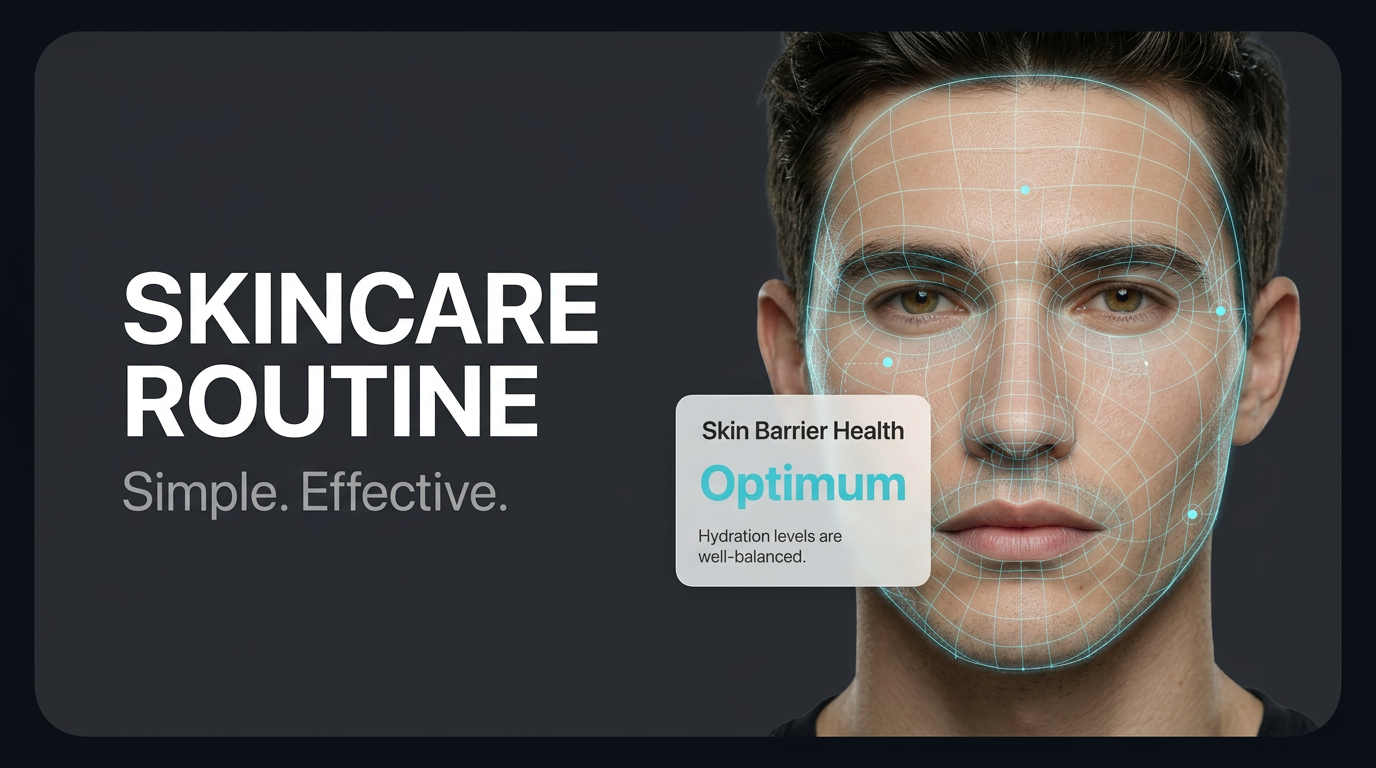
Worked example. Assumptions: A male with oily skin, mild post-acne hyperpigmentation, and a budget of $50 per month starting a routine from scratch to enhance overall facial aesthetics. He has no prior experience with daily skincare.
Month 1: Establishing the Baseline. The protocol begins with a salicylic acid cleanser, a lightweight gel moisturizer, and a matte SPF 30+ sunscreen. The cleanser and moisturizer are used twice daily, and the SPF every morning. The immediate result is a stabilized skin barrier and reduced mid-day oil production.
Month 2: Introducing Actives. Once the baseline is tolerated, an over-the-counter retinoid is introduced three nights a week to target hyperpigmentation. It is applied over the moisturizer to reduce irritation. Mild flaking occurs initially but subsides as the skin adapts over several weeks.
Month 3: Maintenance. After 8 to 12 weeks, consistent hydration and cellular turnover yield visible changes. Hyperpigmentation fades, and pores appear smaller because they are clear of oxidized sebum. The daily time commitment remains under five minutes, proving that consistency outranks complexity.
Common Mistakes in a Male Skincare Regimen
The looksmaxxing community often falls into the trap of thinking more is better. In practice, a common pattern we see is men buying a complex routine, applying multiple strong acids to their face, burning their skin barrier in three days, and quitting entirely. Skincare is a marathon of consistency, not a sprint of chemical warfare.
Over-exfoliation: Using physical scrubs daily or layering multiple chemical exfoliants destroys the acid mantle. If your skin looks shiny like plastic, feels tight, and burns when you apply plain moisturizer, you have damaged your barrier. Stop all actives immediately and use only water, a gentle cleanser, and a heavy moisturizer for two weeks.
Inconsistency with SPF: Applying retinol at night but skipping sunscreen during the day is counterproductive. Retinoids make your skin more photosensitive. If you skip SPF, you will accelerate UV damage and darken your acne scars, completely reversing the progress you made overnight.
Impatience: Skin operates on a continuous renewal cycle. Switching products every week because you do not see instant results guarantees failure. You must test a new routine for several weeks before judging its efficacy. Constantly rotating active ingredients only causes chronic inflammation.
What Progress Actually Looks Like: Week by Week Expectations
Understanding the timeline of skin transformation prevents premature frustration. You will not get glass skin in a weekend. Here is the clinical reality of what to expect when you start a proper regimen and stick to it daily.
Weeks 1 to 2: Your skin barrier begins to repair. Hydration levels increase, making your face look slightly plumper and less dull. If you introduced a retinoid or an exfoliant, you may experience purging. Purging is a temporary breakout caused by accelerated cell turnover pushing trapped sebum to the surface. It is normal.
Weeks 3 to 6: The purging subsides. Your skin texture starts to feel significantly smoother to the touch. The frequency of new breakouts drops sharply. The tight, dry feeling after showering disappears entirely because your lipid barrier is functioning correctly and retaining moisture.
Weeks 8 to 12: This is when structural changes become visible to others. Post-inflammatory hyperpigmentation begins to noticeably fade. Fine lines appear softer due to consistent hydration and collagen support. At this point, the routine transitions from corrective to maintenance, and the results compound over the following months.
Diet, Lifestyle, and Clear Skin Synergy
Topical routines are only half the equation. Your skin is an organ that reflects your internal health. You cannot out-moisturize a terrible diet, chronic sleep deprivation, and high stress levels. Integrating your skincare with broader skin and grooming protocols yields exponential results.
Dietary impacts: There is strong evidence linking high sugar intake to acne severity. Data from a randomized controlled trial demonstrates that a low-glycemic-load diet improves symptoms in acne vulgaris patients. Spikes in blood sugar increase insulin-like growth factor 1, which triggers excess sebum production and inflammation.
Sleep and stress: Cortisol, the stress hormone, breaks down collagen and triggers breakouts. Getting adequate quality sleep is when your body produces the majority of its human growth hormone, repairing daily cellular damage. Chronic sleep deprivation leaves the skin looking dull and accelerates the formation of dark circles.
Similarly, hydration matters. Drinking adequate water supports overall physiological function, though it does not replace a topical moisturizer. Combine a solid skincare routine with a clean diet and fitness regimen, much like you would approach sharpening your jawline through holistic body composition changes.
Key Takeaways and What to Do Next
Building a reliable skincare routine is one of the highest return-on-investment habits a man can develop for his long-term appearance. It requires minimal daily time but demands strict consistency. Review these core principles before you start.
- A proper routine requires only a cleanser, moisturizer, and SPF 30+ sunscreen.
- Chemical exfoliants like salicylic acid are vastly superior to harsh physical scrubs.
- Tretinoin is the most clinically proven topical ingredient for long-term anti-aging.
- Skin operates on a continuous cycle; expect to wait 8 to 12 weeks for visible improvements.
- Damaging your skin barrier through over-exfoliation is the most common beginner mistake.
- A low-glycemic diet supports clear skin by reducing internal inflammation and sebum production.
What to Do Next
If you are ready to stop guessing and start building a regimen that works for your specific genetics, take the customized routine plan. It takes two minutes and will give you an exact breakdown of which ingredients you need, and more importantly, which ones you should avoid.
FAQ
Do men really need a different skincare routine than women?
The biological mechanisms of skin are the same, but men have thicker skin and produce more sebum. This means men often benefit more from lightweight gel moisturizers and salicylic acid to manage oil, rather than heavy creams designed for thinner skin.
How long does it take for a skincare routine to work?
Basic hydration improves within days, but structural changes take time. You must wait 8 to 12 weeks to see significant reductions in acne, hyperpigmentation, and fine lines due to the natural skin cellular turnover cycle.
Is washing my face with bar soap bad?
Yes. Standard bar soaps have a high pH that destroys the skin's acidic barrier, known as the acid mantle. This leads to dryness, irritation, and rebound oil production.
What is the best ingredient for anti-aging?
Sunscreen is the absolute most important preventative product. For reversing existing damage and building collagen, prescription retinoids like tretinoin have the strongest clinical backing.
Why is my skin breaking out after starting a new routine?
If you started an active ingredient like a retinoid or chemical exfoliant, you may be experiencing purging, where trapped sebum is pushed to the surface. If you are breaking out from a basic moisturizer, the formula may be too heavy and comedogenic for your skin type.
Do I need to wear sunscreen indoors or on cloudy days?
Yes. UVA rays, which are primarily responsible for skin aging and collagen degradation, can penetrate through heavy clouds and standard glass windows.
Can diet actually affect my acne?
Yes. Clinical studies show that high-glycemic diets increase insulin spikes, which trigger excess sebum production and worsen acne symptoms.
LooxMaxxing
Stop guessing. Get your real rating.
Upload three photos, answer the assessment and get an AI facial rating with a personalized improvement program.
Take the free assessmentAbout the author
LooxMaxxing EditorialEditorial
Articles from LooxMaxxing about appearance, grooming, skincare, hair, training and lifestyle.
Keep reading
Looksmaxxing Reddit: What Works and What is Toxic
Discover the truth about looksmaxxing reddit communities. We separate evidence-based self-improvement from toxic folklore so you can see real results.
What Are Hunter Eyes? Anatomy, Genetics and Reality
Discover the anatomy behind hunter eyes, how genetics shape your face, and the honest truth about what you can actually change. Get your personalized plan.
AI Rate My Face: The Honest Truth About Algorithmic Scores
Curious if an ai rate my face tool is accurate? Discover how facial algorithms work, where they fail, and why your score does not define your looks.
Medical disclaimer: this article is general information about appearance, grooming and lifestyle habits. It is not medical advice, diagnosis or treatment. Talk to a licensed doctor, dermatologist or dentist before starting any medication, procedure or treatment, and never attempt surgical or orthodontic changes on your own.